

The development trend of uv printers in 2020
Mar 15, 2021
Leave a message
The domestic uv printer industry has been developed for more than ten years, and the technology of flat-panel printing has basically reached a bottleneck at this stage. Throughout these years, the evolution of nozzles has become a main line. Most uv printer manufacturers started with Epson nozzles, Seiko nozzles, and Konica nozzles. Later, Ricoh nozzles, Toshiba nozzles, Kyocera nozzles, and Starlight nozzles continued to change. It is also mainly based on the replacement of the nozzles in Japan. The core pursuit of the market is the cost-effectiveness of the print head, that is, a better balance between speed, accuracy, life and price.
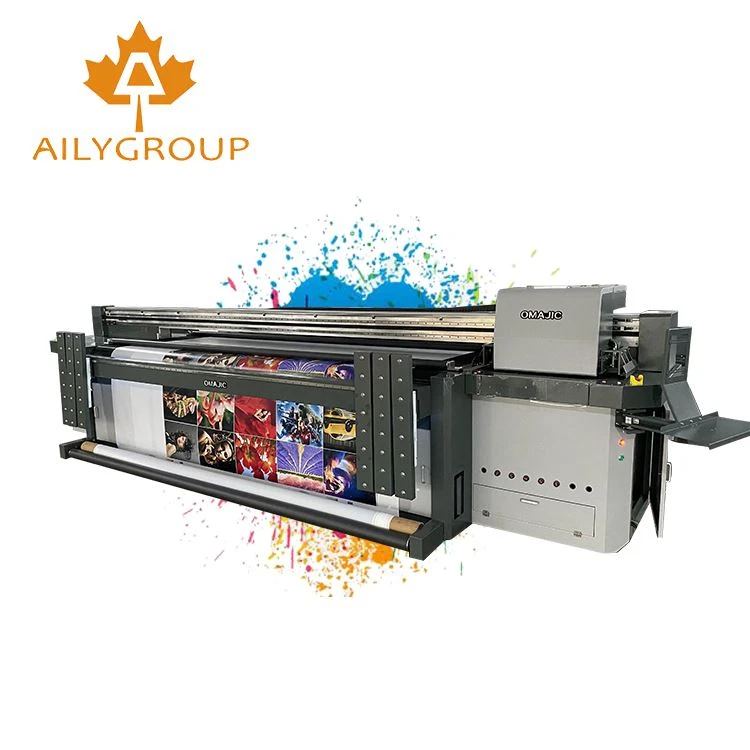
However, this model is dependent on foreign nozzle manufacturers to upgrade and replace nozzles. Although the mode of upgrading existing uv printers is very comfortable, it only needs to develop the motherboard program and the investment is small. It is similar to boiling frogs in warm water, but there are two big ones. The drawbacks.
A large part of the manufacturers' eyes remain on the existing industry users, and they have not invested more funds, technology, and personnel in the application technology of other industries. This has led to a slow growth in the number of users in the domestic market of uv printers, and the cost of the entire industry is relatively high. High, if the market is not good, the price war will start.
Second, the gap with foreign uv printer manufacturers is getting bigger and bigger, but in terms of product gross profit, 80% or even 100% of imported equipment is common, and 30% of domestic equipment is not bad. This also extends a lot of bad imagination. In order to ensure their own profits, some uv printer companies will shoddy the equipment, refurbish second-hand equipment, only replace it without repairing after-sales, and earn money from after-sales.
Fortunately, in the past two years, some uv printer manufacturers have been trying new paths, such as:
1. Some pursue production efficiency and take the onepass route to increase the number of print heads to increase printing capacity;
2. Some go to the cylinder industry, develop and produce custom uv printers for wine bottles and vacuum flasks, and broaden the application of this industry;
3. Some try in the container field and engage in vertical uv printing patterns, so as to customize printed patterns and text on the surface of the container body of overseas shipping;
4. Some try cone or irregular uv printing, similar to water cups with flat sides, water cups with handles, etc.;
5. Some combined with other industry equipment to do in-depth secondary development, similar to grafting mechanical arms, automatic loading and unloading, combined with conveyor belts, light solid machines, and automatic assembly lines.
In addition, some manufacturers are also testing and optimizing uv printers such as Toshiba cj1 nozzles, Ricoh g6 nozzles, etc. I believe they will be seen at the exhibition in March next year, and I believe that the uv printer industry will develop better in 2020.