



Aily Group is a one-stop printing solution and application manufacturer. We have had a factory for 15 years producing UV printers, DTF printers, UV DTF, eco-solvent printers, sublimation printers, laminators, ink, etc. Our main products include T-Shirt Printer Dtg Screen Machine A3 Size, A3 High Quality Dtg Flatbed Printer Low Price, 2020 8 Colour Dtg Digital Printer A3, A3 Direct To Garment Dtg Printer Personalized, 2020 6 Colour Dtg Digital Printer A3, Dtg Printer A3 Size Pakistan Pircs, etc.
Advantages of DTG Printer Production
Competitive Offer
All the product prices are updated monthly according to market changes in order to ensure our customers get the most cost-effective machines.
Timely Service
Covers the time zones from the US, the EU, all the way to Asia. Professional engineers are here to help.
Complete Certifications System
NEWIN Inkjet provides full certification to make sure there are no problems for customers to import.
Quality Assurance
Strict quality checks before shipping, making sure that the full functionality of the equipment.
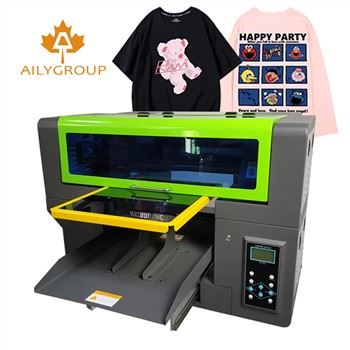
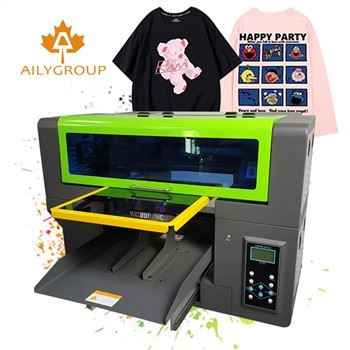
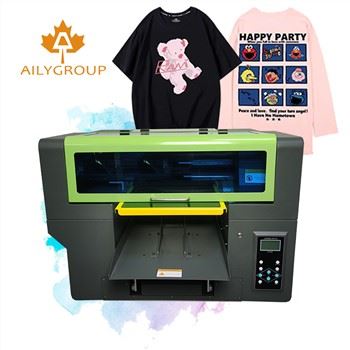
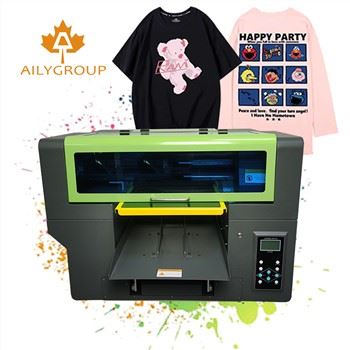
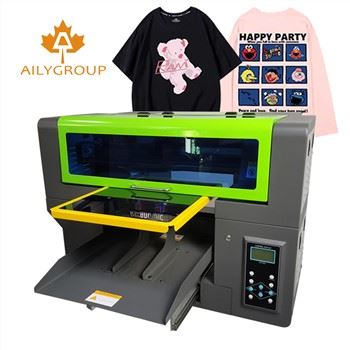
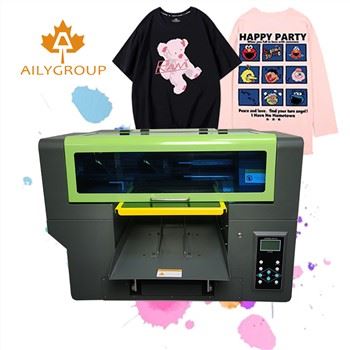
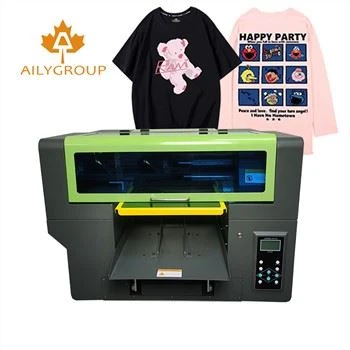
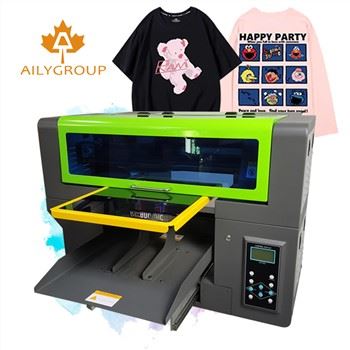
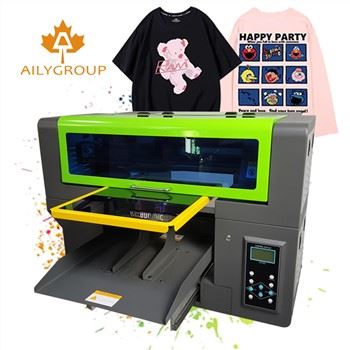
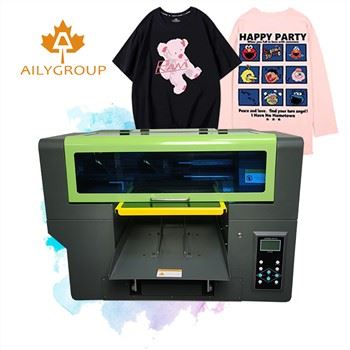
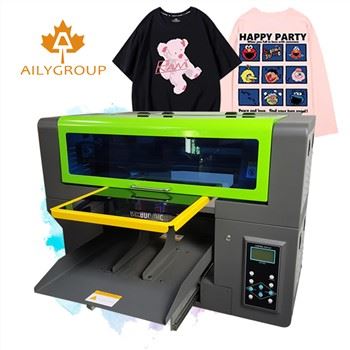
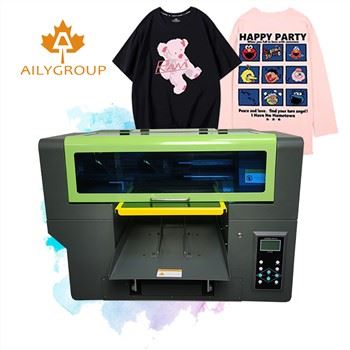
DTG printer is a new type of digital direct-to-clothing printing technology, which can achieve high-detail pattern printing effect and fast production speed. It helps various industries create high-quality custom products including T-shirts, shirts, towels, tote bags and more. This technology not only provides high-efficiency production, but also guarantees a certain quality standard.
The DTG printer, also known as direct-to-garment printing, is a type of printer that uses special inks to directly print images onto the surface of a garment. This printing method is often used to create personalized or customized t-shirts, hoodies, and other clothing items.
The DTG printer typically uses a combination of inkjet printing and heat transfer printing technologies. The inkjet printing process involves spraying tiny droplets of ink onto the surface of the garment, creating a desired image or design. The heat transfer printing process involves using heat and pressure to transfer the printed image onto the garment material.
The DTG printer is capable of printing directly onto the surface of various types of garments, eliminating the need for pre-treatment or post-processing. This direct-to-garment printing process significantly reduces production time and improves efficiency.
The DTG printer uses special inks that are specifically formulated for printing on textiles. These inks are designed to strongly bond with the fibres of the garment, ensuring that the printed images are durable and washable. The resulting prints are able to withstand multiple wash cycles without fading or loss of quality.
The DTG printer offers a wealth of design options and customization possibilities. It can print a variety of images, including photos, logos, designs, and text, in various colors and resolutions. Additionally, the printer provides variable printing zones, enabling different areas of the garment to be printed with different images or designs. This flexibility in design options makes the DTG printer suitable for a range of applications, such as creating personalized or customized clothing items, printing promotional items, or printing on soft goods.
The DTG printer is designed to be compact and mobile, making it easy to use and transport. It is suitable for both small and large-scale printing projects and can be used in a variety of settings, including printing studios, small businesses, or even at events or on-location printing. The portability of the DTG printer allows for convenient and flexible printing operations.
The DTG printer is not limited to a specific type of printing application. It can be used for a range of purposes, such as creating personalized clothing items for individuals or small businesses, printing promotional items for marketing campaigns, or printing on soft goods like pillows or phone cases. The versatility of the DTG printer makes it an ideal solution for a variety of printing needs.
Graphics are printed directly onto the desired garment by machine. In fact, a DTG printing machine works similarly to how your inkjet printer at home or in the office would, but instead of paper, an article of clothing or fabric is utilized instead. By using a digital printing method, DTG printing takes the ink and jets it onto the fabric in a matter of minutes. Direct to garment printers can be used on t-shirts, sweatshirts, posters, banners, and so much more! Most DTG printing machines require RIP software.
It is extremely important that you use a t-shirt that has had pre-treatment added to it prior to starting the direct to garment printing process. You run the risk of a lower quality print if you skip out on this crucial step. Next, designs will often start with a white ink base to go underneath the entire artwork in order to make it pop, so set up your DTG machine and print the white base on. You can now move on and start printing your CYMK colors. Unlike DTS printing technology, you do not have to separate your colors and print them one at a time. Finally, you cure your t-shirt and let it set.
That’s it! Your t-shirt should have high-quality artwork placed exactly where you have designated it to print.

What Type of Designs Works Best with DTG Printer?
DTG Printing is simple, affordable and very eye-catching. The inkjet technology helps the garment retain the bright colors that are used. However, certain rules need to be followed for the best outcome.
The first thing that affects print is fabric. Cotton is the best fabric to work within DTG Printing. It is easy to control and you have the guarantee of a perfect print because cotton threads have the power to absorb the ink that is ejected from the jet.
The other thing that you need to keep in mind is that the designs should be in contrast to the colors of the garment. For example, if you have a light-colored garment, you ought to use deeper and darker colors in your designs.
In DTG printing, bright colors and elaborate designs work the best. Try to use a wide variety of colors while making a design to be printed in this process.
How Much Does DTG Printing Cost?
Before we explain how much DTG printing will cost you per garment, it's important to understand the costs that printing companies take on to offer this type of service. There's no way around it: DTG printing simply costs more than other types of fabric printing services, and even the most successful printing companies will need to make sacrifices to offer DTG printing.
The best DTG printers cost more than $15,000. Even when you're taking in millions of dollars a month, $17,000 is no drop in the bucket, and smaller printing companies won't be able to justify the expense of this high-tech equipment.
DTG printer ink isn't cheap either. Printing companies can buy this specialized type of ink in bulk and save money, but companies that print high volumes of DTG garments will end up spending thousands of dollars per month on ink.
There's no way around the high cost of DTG printing, but the more that a printing company prints per month, the more their prices drop.
The price to print a design on a garment with DTG printing varies based on several factors:
●First, you'll have to keep in mind the company's volume. Higher-volume companies charge lower prices, and lower-volume companies charge higher prices.
●Next, you'll need to consider the DTG printing technology each company uses to print garments.
●Keep in mind that printing companies can save money on DTG printing even though this garment printing method is more expensive overall. Since this type of printing doesn't require much setup, printing companies can save on labor when they use DTG printers.
●Lastly, the volume of your order changes the cost to print designs on your garments. Most companies will offer bulk discounts that get bigger the more you order.
Printing companies will charge between $3 and $7 per garment for DTG printing. This price varies based on the size of the print area, the size of the minimum order, and the overall volume that the company moves through per month.
What You Should Consider When Choosing a DTG Printer
There are many types of DTG printers that range in price and quality, so it’s important you find the best one for the way you work. Here are six key areas to consider to make sure you get the most out of your investment.

What is Your Daily Production?
Is the Pretreatment Process Kept Offline?
Are Quality and Ink Usage Optimized?
Is Continuous Training And Responsive Support Provided?
What is the Useful Life and Cost per Print?
Will the Printer Integrate and Be Scalable Long-Term?
Personalized And Customized Clothing Items
The DTG printer is commonly used to create personalized or customized clothing items. Individuals and businesses can use the printer to print their own designs, logos, photos, or text onto T-shirts, hoodies, tank tops, and other types of garments. This allows for a unique and personalized touch to clothing items, making them suitable for gift-giving, events, promotional activities, or personal expression.
Soft Goods Printing
The DTG printer can also be used for printing on soft goods, such as pillows, phone cases, and other items made from soft materials. The printer can print images or designs onto these items, adding a decorative and personalized touch to them. This application is particularly useful for small businesses or individuals who want to create unique and customized products for sale or personal use.
High-Quality and Durable Prints
The DTG printer is suitable for printing on textiles and soft materials that require high-quality prints with excellent durability. This includes printing on towels, napkins, tablecloths, and other types of textiles that require washable and durable prints. The strong bond between the inks and fibres of the garment ensures that the prints will remain intact even after multiple wash cycles.
Tips for Optimize and Maintain DTG Printer
This is the biggie. The capping station is that magic little “tray” that comes up against the bottom of the head assembly and caps it or seals it so the head won’t clog. And, it caps the head from outside air when you are doing a head cleaning.
The problem is the capping station can get ink chunks (especially the white) over a period of time. After all, when the machine does a head cleaning cycle the capping station caps the head and a vacuum draws ink out of the head and dumps it into the waste tank. There is a chance excess ink sitting on top of the foam that lines the capping station will start to build up and dry.
Guess what? If the capping station won’t cap tightly at night – what do you think will happen? The head will clog. If the clog is white ink, there may be ZERO way to salvage the $400 to $500 head. A lesson well learned. But, you will first call your supplier and blame them for selling you a faulty machine. They will say “did you read the manual about keeping the capping station clean?” and you will say – I never read a manual.
This is also a biggie. Since the capping station typically has a foam liner in the bed of it, there is a chance this foam will get crusty and full of ink. This ink can start to dry out. By simply putting a few drops of head cleaning fluid (or glass cleaner) on the capping station at night, you will keep the head “moist” and help prevent it from drying out.
All Epson based printers have a small wiper blade (it looks like a tiny windshield wiper). This blade is used to wipe the bottom of the head. As you print high speed and literally dump ink on a T-Shirt the bottom of the head can start to get ink build up. The wiper wipes the head. The problem is if you are printing with white ink, the wiper can start to get a buildup of white ink that will dry causing the wiper to not be effective. You must clean the wiper blade every day! Clean the wiper the same way as the capping station.
When you are printing with the head very low and close to the shirt (for the best quality) the head will start to pick up lint off the shirt. And, ink can simply start to build up from the amount of ink being pumped through it. The Wiper Blade is supposed to clean off the bottom of the head but as you know, some of these parts on Epson based printers are like a toy. They only work pretty well. And, ink will start to get around the edge of the head. Using your foam tipped swab, wipe down the bottom of the head and around the edges. Be careful not to scratch the bottom of the head.
One of the problems with an “open ink system” is that there is a close relationship between the height of the ink bottles and the bottom of the head. If the bottles are too high, ink will siphon out of the head (you might wake up to find all the ink on the machine and the floor). If the ink bottles are too low, you will have ink starvation. On machines that use cartridges you have little control over the height of the ink. If you are using a bulk ink system or open cartridges, do NOT overfill the cartridges or bottles. The manufacturer will generally put an “ink level” mark on the bottle or cartrige. That might not always be correct. You are much better off not topping off the bottles or cartridges and keeping the ink level in them more of a constant and refill them more often.
On the side of the machine that is away from the capping station is what is called a Spit Tray. If you watch the printer print you will see it stop every now and then and “spit” ink into this tray. This is like clearing its throat. It keeps the ink flowing. The spit tray can start to build up ink and sometimes during the spit, the head actually picks up ink. Keep the spit tray clean and not overflowing with ink.
This one really hits home for me. I stopped counting how many times someone called to complain about a poor print and when asked “did you do a nozzle check?” the response was no. A nozzle check tells you how the nozzles are firing. It is like a “report card.” If all the nozzles are firing and the print is weak, then something else is going on. If only 50% of the nozzles are firing then it is OBVIOUS why the print is weak and the reason you only have 50% nozzles is probably a clogged capping station, crusty wiper blade or the machine has been setting for a week without use. It tells a whole lot.
In order to see the white ink on a nozzle check, use clear film or something transparent. You can’t clearly see how well the white ink is printing on white paper.
Some manufacturers say to NOT shut the machine down. Others claim that the head caps better during shut down.
But, most software to drive these machines now has a “wakeup” feature. Since these machines like to run, you can set the software to do a head cleaning during the night to keep the ink flowing. If you set a machine to do a head cleaning two times per night, you will probably use about $4.00 USD of ink. No big deal if it saves a head!
If you don’t have a head cleaning “wakeup” utility then shut the machine down at night.
Our Factory
From 2008 till now, we have established 2 printer factories and one ink factory, 5 landing warehouse.


Our Certificate


DTG Printer: The Ultimate FAQ Guide
Q: How does a DTG printer work?
Q: What types of materials can a DTG printer print on?
Q: What is the difference between a DTG printer and a regular printer?
Q: What is the resolution of a DTG print?
Q: What types of ink are used in a DTG printer?
Q: How does a DTG printer handle different types of fabric?
Q: Is a DTG printer expensive?
Q: Do I need any special skills to use a DTG printer?
Q: How long does it take to set up a DTG printer?
Q: Is a DTG printer suitable for home use?
Q: What is the best way to maintain a DTG printer?
Q: What are the environmental impacts of a DTG printer?
We're well-known as one of the leading dtg printer manufacturers and suppliers in China for our cheap products and good service. Please feel free to buy discount dtg printer made in China here from our factory. For price consultation, contact us.
A3 DTG Printer, T Shirt DTG Printer