



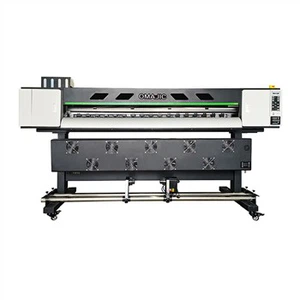
Aily Group is a one-stop printing solution and application manufacturer. We have had a factory for 15 years producing UV printers, DTF printers, UV DTF, eco-solvent printers, sublimation printers, laminators, ink, etc. Our main products include Eco Solvent Vinyl Printing Machine, Plotter Eco Solvent, Ecosolvent Printer, Eco Solvent Printer, 6 Feet Eco Solvent Printer With High Speed, 1.8m Eco Solvent Printer With Two Heads, OMAJIC 1800 Mm Eco Solvent Printer, OMAJIC 1802 Eco Solvent Printer, Eco Solvent Printer With High Speed, etc.
Advantages of DTG Printer Production
Competitive Offer
All the product prices are updated monthly according to market changes in order to ensure our customers get the most cost-effective machines.
Timely Service
Covers the time zones from the US, the EU, all the way to Asia. Professional engineers are here to help.
Complete Certifications System
NEWIN Inkjet provides full certification to make sure there are no problems for customers to import.
Quality Assurance
Strict quality checks before shipping, making sure that the full functionality of the equipment.


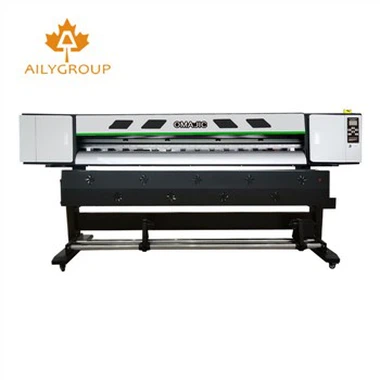


Large format printers are an important part of digital printing technology, capable of producing high-quality prints in a variety of materials and colors. It has many excellent features and can be widely used in various fields.
Large format printers are high-end printing machines that are used to print large-size documents, such as posters, banners, and signs. These printers work by depositing ink onto a substrate, such as paper or vinyl, in a controlled manner to create a desired image or text. They are often used in commercial printing, advertising, and graphic design applications.
Features of Large Format Printer
High-Quality Output
Large Format Printers produce prints with remarkable detail, color vibrancy, and resolution, ensuring professional-looking results that are suitable for a range of applications, including poster printing, signage, and large-format advertising.
Versatility
These printers are not limited to paper printing; they can print on a variety of materials such as vinyl, canvas, and more. This flexibility allows for creativity and innovation in printed output, making Large Format Printers suitable for unique applications like event décor, trade show displays, and custom banners.
Speed and Efficiency
Large Format Printers have the capability to print large volumes of material quickly, making them suitable for bulk printing jobs or time-sensitive projects. This efficiency can be a significant advantage in terms of meeting deadlines and reducing overall production time.
User-Friendly Operation
These printers are designed to be easy to use, with features like automated paper handling and duplex printing capabilities. This makes it straightforward for users to produce professional-quality prints without the need for advanced technical knowledge.
Networking Capabilities
Many Large Format Printers come with networking options, allowing users to connect the printer to a computer or network and print remotely. This capability adds convenience and flexibility to the printing process.
Scalability
Large Format Printers are available in various sizes, allowing users to choose the printer that best suits their specific needs in terms of print size and output capacity.
Reliability
Large Format Printers are built to last, with robust components designed to withstand regular use and longevity. They are often reliable workhorses for high-volume printing environments.
Customizable Features
Many Large Format Printers offer options for customizing print output, such as adding logos or custom finishes to prints, further enhancing their versatility and personalization capabilities.
Environmentally Friendly
Many Large Format Printers are designed with eco-friendly features, such as energy-saving modes or using low-odor or solvent-free inks, reducing their environmental impact while also reducing operating costs.
Large format printing and wide format printing are both used to describe a type of printing that is done on a large scale.
However, there is a difference between the two terms.
Wide-format printing generally refers to any type of large-scale printing, regardless of the specific dimensions.
Large format printing, on the other hand, is used to describe a specific size of the print.
In order to be considered a large format, a print must have dimensions that exceed 36 inches in either width or height.
As a result, all wide format prints are large format prints, but not all large format prints are wide format prints.
How does a Large Format Printer Work?
The Large Format Printer process is actually quite similar to the digital printing method. It is ideal for items that require full-color printing.
First, you will need to select which type of material you want to use, and what the end product is going to be. Then, you will need to define the exact shape and size of that product.
Once this is done, the appropriate artwork will need to be created to match the right dimensions for the product. In line with the graphics, the press will set-out the toner via a range of large nozzles. During which, a very fine layer of ink is sprayed onto the surface according to the design. The ink gets directly applied to the product without using any form of transfer, and this creates a highly authentic print.
Most printing companies will then use UV lights to help dry the ink and finalize the project. In terms of the time it takes to do large format printing, it is just as quick as digital printing, and delivers a high-quality image.
Types of Large Format Printer
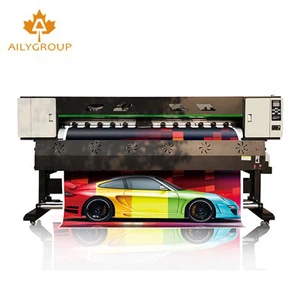
Eco Solvent Printer
An eco solvent printer is a type of printer that uses eco-friendly solvent ink to print images or text onto a variety of substrates. These printers are designed to be environmentally friendly, using low-odor and low-VOC (volatile organic compound) inks that minimize the impact on indoor air quality. Eco solvent printers are often used for printing on non-absorbent surfaces such as plastic, glass, and metal, producing high-quality prints with excellent durability and scratch resistance.
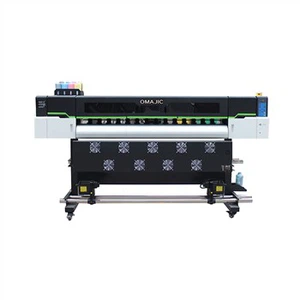
Sublimation Printer
A sublimation printer is a specialized printer that uses sublimation ink to produce high-quality prints on a range of materials. Sublimation ink is applied to the surface of the substrate and then transferred to the material through a heat press or heat transfer process. This process causes the ink to change phase from a solid to a gas, resulting in a permanent and vivid print with excellent color saturation and resolution. Sublimation printers are commonly used for printing on items such as apparel, ceramics, and glass, producing vibrant prints that are suitable for commercial and personal applications.
Textile Printer
A textile printer is a machine designed to print images or text onto fabric materials such as cotton, silk, or polyester. These printers use various printing methods, including screen printing, digital printing, and flatbed printing, depending on the specific requirements of the application. Textile printers are capable of printing large formats or small runs with high quality and color accuracy, making them suitable for a range of industries including fashion, home furnishings, and promotional items. They play a crucial role in the production of printed textiles for various applications such as clothing, flags, and banners.
How Many Inks Should a Large Format Printer Use?
The number of inks that a large format printer uses depends on the type of printer and the desired print quality. For example, a basic wide format printer uses four inks (cyan, magenta, yellow, and black), while a high-end wide format printers may use 12 inks or more. More inks can produce a wider range of colors and smoother gradients.
What about Print Speed and Resolution in Large Format Printer?
Print speed and resolution are two important factors to consider when choosing a large format printer. Print speed is measured in square feet per hour (SFPH). Resolution is measured in dots per inch (DPI). A higher resolution will produce sharper prints, but it will also take longer to print.
How Much Space Do You Need to Run Large Format Printing Business?
Large format printers can be large and bulky, so it is important to make sure that you have enough space to set one up. Consider the dimensions of the printer, as well as the space that you will need for paper and output.
Media Compatibility of Large Format Printers
What types of media do you need to print on? Some large format printers are only compatible with certain types of media, such as canvas or vinyl.
Prices of Large Format Printers
Large format printers can range in price from a few thousand dollars to tens of thousands of dollars. Set a budget before you start shopping for large format one. Consider buying machines that save money and deliver the best outcome.
Maintenance that Large Format Printers Require
Large format printers require regular maintenance to keep them printing at their best. Make sure factor in the cost of maintenance when choosing a large format printer.
Applications of Large Format Printer
Poster Printing
Large Format Printers are commonly used for printing posters, as they can produce large format prints with vivid colors and high resolution. Posters are often used for advertising, promotional events, and marketing campaigns, making the high-quality prints from Large Format Printers ideal for attracting attention.
Signage and Displays
Large Format Printers are essential for creating outdoor signage and displays, such as storefronts, building wraps, and event backdrops. The ability to print large formats and use different materials gives designers the flexibility to create unique and impactful signs and displays.
Trade Show Displays
Trade shows and exhibitions require high-quality printed materials to make a positive impression on visitors. Large Format Printers are used to create exhibition stands, banners, and signage that are essential for effective communication and brand representation at these events.
Architectural Visualization
Architects and designers often use Large Format Printers to print large-scale models and visualizations of their designs. These prints provide a detailed representation of the design, allowing for better communication and understanding among stakeholders.
Outdoor Media Printing
Large Format Printers are often used in the production of outdoor media prints, such as billboards, bus wraps, and train wraps. These prints require a high level of quality and durability to withstand outdoor elements, making Large Format Printers an ideal choice for this application.
Custom Printing
Large Format Printers offer the ability to print customized items, making them suitable for printing unique items like personalized gifts, event souvenirs, or promotional materials with a personal touch.
Large Format Photography
Photographers can use Large Format Printers to print large-scale prints of their images, giving them the ability to showcase their work in a more impactful way. The high-quality prints produced by Large Format Printers provide photographers with a professional-looking option for displaying their work.
Printing for Educational Purposes
Large Format Printers can be used in educational institutions for printing large-format maps, charts, timelines, and other teaching aids that require a high level of detail and clarity. This allows students and teachers to have access to larger prints that enhance visual understanding and enhance learning experiences.
Tips to Avoid Blurry Images or Artwork
You need a poster, a banner, a schematic – and you’ve sent the design file to your large format printer, but you get an email back: “Your image must be 300 DPI or else it will be pixelated.” Sound familiar? If so, let’s break down what exactly your printer’s telling you – and what you need to consider to get the absolute best quality from your large format prints.

Designing to Scale
Images
When you’re scaling, you want to make sure your scale doesn’t tamper with your image quality. There are two types of images – raster and vector. This is where that warning about pixelation comes into play. Raster images are composed of pixels, those tiny squares that appear when zooming in too far – think old arcade games – P for Pac-Man. Pixelation refers to the blurriness of a raster image when it is viewed at too high a magnification – like a large format print. When scaled up, raster images can blur depending on the resolution, especially if you are designing at a percentage of the final print piece. JPG, GIF and TIFF are examples of raster file formats.
Vector images, such as EPS and AI are what we recommend for large format printing. Using mathematical calculations that form lines and shapes from one point to another, vector images don’t pixelate because the equation recalculates to accommodate zoom. Vector images can be scaled limitlessly, which makes them perfect for a large format.
Resolution
Color
Margins
Working at a scaled percentage
Finally, you need to revisit the scale of your project. If the project you’re printing is going to end up larger than your design program’s maximum dimensions, you’ll have to work on a scaled down file.
The maximum dimension in InDesign is 216 inches in either direction. For Illustrator, maximum dimensions are a little larger, 227.5 inches in either width or height. In addition, there is a maximum file output increase of 400%, meaning you can’t scale anything down smaller than 25% of the final size.
While working on your images in Photoshop, make them half the scale and double the resolution, so a 120 x 80 inch photo at 100 ppi becomes a 60 x 40 inch photo at 200 ppi. When you link the images into your banner in InDesign or Illustrator, you will need this half-size image because your document is half the final size.
Preflight
Our Factory
From 2008 till now, we have established 2 printer factories and one ink factory, 5 landing warehouse.


Our Certificate


Large Format Printer: The Ultimate FAQ Guide
Q: Why would I need a large format printer?
Q: How does a large format printer compare to a regular printer?
Q: How much does a large format printer cost?
Q: How do I choose the right large format printer for my needs?
Q: What are the common uses for a large format printer?
Q: Do large format printers use special ink?
Q: How do I maintain my large format printer?
Q: How long does it take for a large format printer to print?
Q: Do large format printers use up a lot of ink?
Q: How do I feed paper into a large format printer?
Q: Are large format printers noisy?
We're well-known as one of the leading large format printer manufacturers and suppliers in China for our cheap products and good service. Please feel free to buy discount large format printer made in China here from our factory. For price consultation, contact us.