




Aily Group is a one-stop printing solution and application manufacturer. We have had a factory for 15 years producing UV printers, DTF printers, UV DTF, eco-solvent printers, sublimation printers, laminators, ink, etc. Our main products include Epson Printhead For Printer, Epson Original Printhead, Seiko Printhead, Industrial Printhead, Printheads For Seiko, Printhead Xaar, Printheads For Konica, etc.
Advantages of DTG Printer Production
Competitive Offer
All the product prices are updated monthly according to market changes in order to ensure our customers get the most cost-effective machines.
Timely Service
Covers the time zones from the US, the EU, all the way to Asia. Professional engineers are here to help.
Complete Certifications System
NEWIN Inkjet provides full certification to make sure there are no problems for customers to import.
Quality Assurance
Strict quality checks before shipping, making sure that the full functionality of the equipment.
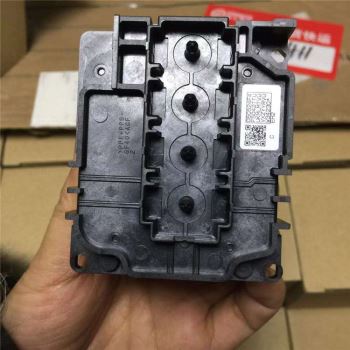
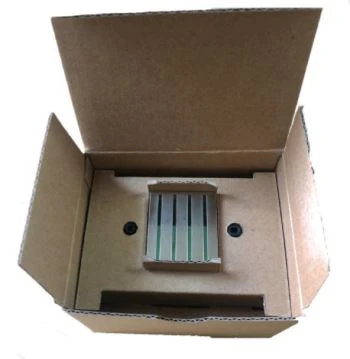
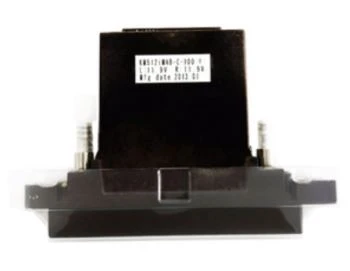
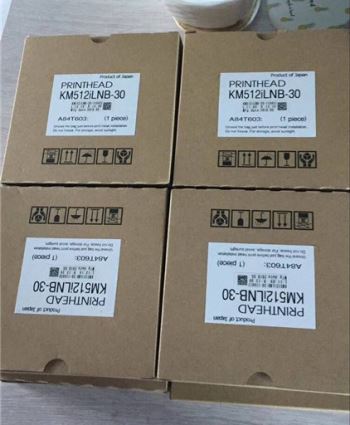
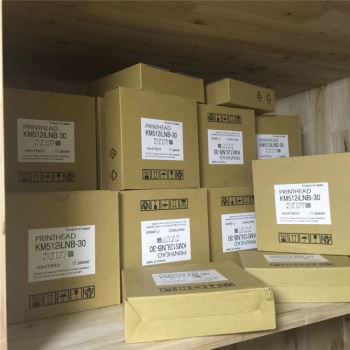
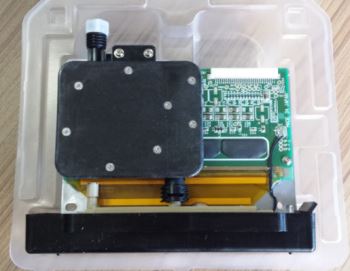
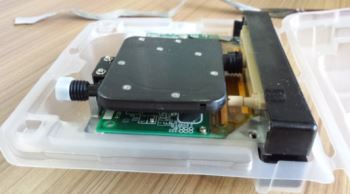

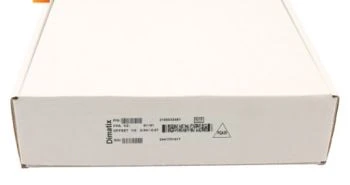
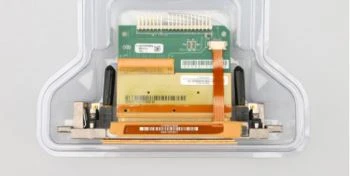
The inkjet printer printhead is a remarkable piece of technology that has revolutionized the printing industry. This tiny device has been responsible for producing exceptional quality prints, making it an indispensable tool for businesses and individuals alike.
The print head is a crucial component of an inkjet printer. It is responsible for the deposition of ink onto the printing medium, creating the desired output. The print head contains a series of tiny nozzles that spray ink in a precise pattern onto the paper, creating text or images. The print head is typically mounted on the printer's carriage and moves back and forth across the paper, depositing ink onto the surface. The quality of the prints depends largely on the performance of the print head, which must be able to produce accurate and consistent ink droplets to create sharp and clear prints. The print head is a crucial factor in determining the overall quality of the inkjet printer and the prints it produces.
Features of Print Head
Accuracy and Consistency
The print head is designed to produce precise and consistent ink droplets, crucial for creating sharp and clear prints. The tiny nozzles in the print head must be accurately calibrated to eject ink in a controlled pattern and volume. This ensures that the printed output is free of blots, splotches, or other imperfections.
Ink Compatibility
The print head must be compatible with the ink used in the printer. Different inkjet printers use different types of ink, and the print head must be able to accommodate the specific ink used. The print head may be designed to optimize the use of particular inks, ensuring that they are deposited evenly and with the desired intensity on the paper.


Ink Flow Control
The print head must have excellent ink flow control. The ink must flow through the nozzles smoothly and without interruption to maintain consistent printing quality. Proper ink flow control requires precise design and manufacturing of the print head, including the internal channels and ink feed systems.
Durability and Reliability
The print head must be durable and reliable. Since it is a precision component that undergoes continuous use during printing, it must be able to withstand wear and tear. The materials used in the construction of the print head must be robust and capable of enduring the rigors of daily use. Additionally, most modern inkjet printers have replaceable print heads, allowing users to replace them when necessary, further enhancing their reliability and longevity.
Working Principle of Print Head
The heating element (comprising of tiny resistors) rapidly heat a thin layer of liquid ink. The heated ink causes a bubble to form, expelling the ink through a nozzle. The heat also forces air out of the ink molecules.
The ink is then fired out at a velocity of up to 20 meters per second. This super-heated vapour explosion lasts just 2 millionths of a second, and is repeated thousands of times every second for each of the hundreds of microscopic nozzles on the print head. As the ink is rapidly expelled out of each chamber nozzle, this in turn creates suction, allowing further ink to be pulled back through into the chamber nozzle.
Depending upon the printer model between 4,000-15,000 ink nozzles are used to fire ink drops down to the paper surface, with up to half a million ink drops per second being released during a typical printing job.
The print head skims about 400ths of an inch above the paper surface, and as the paper transfers through the printer, the printer control board orchestrates the ink shooting sequence so that millions of individual droplets are precisely and accurately dropped in the correct place, in order to form the text and images on the paper.
The ink is release in a CMYK sequence (first Cyan, then Magenta, next Yellow and then the 'Key' colour Black). Drop accuracy is critical and the control board uses complex print masking algorithms to blend multiple colours together on the page.
The print head is the most complex and technically demanding part of an ink-jet printer. Print heads are tiny nozzles and they perform the most crucial job in printing. They fire tiny ink droplets that make up the overall image of the print. And with passage of time and use they do get worn off and dirty.
Print Appears with Bands/ Faded or With Streaks.
If the print appears faded or parts of the prints are faded, then it’s time to invest in new print heads. Streaks in the texts that’s printed, is also a sign that nozzles are missing the prints.
If you are seeing light banding, which can be light lines going in the direction of the print head, you should try a Head Cleaning, as one of your print heads may not be firing correctly.
Missing dots or lines also indicate that many nozzles are missing to fire/ print.
Your Printer Shows Messages That Require You to Change the Print Head.
Some if not many printers will display error messages stating that it’s time to change it.
Print heads are designed to have a life expectancy. On average, every nozzle is expected to produce 20-50 billion ink drops during its lifetime (WOW). This is considered to be the case for piezoelectric (piezo) heads, the type commonly used in most wide format printers.
Printer Heads Can and Will Fail If:
The Printer is without Ink: Ink in reality is a lubricant for the head assembly and without it the print head overheats and burns itself out. Just like your car need water in the radiator, you print head needs ink to keep it cool and conduct the heat away.
The Printer is not printing for extended period of time: Ink, although specially formulated not to evaporate, is still prone to evaporate over time, and as a result the remaining (pigment, or dye) becomes concentrated and can eventually clog the heads. If you want to keep you printer running smoothly make sure you use your ink with 6 months of opening, and use the print head cleaning cycle on the printer at least once a week.
You printer needs ongoing maintenance just like your car, and that means the heads need to be flushed at regular intervals. Leaving your printer either out of ink, or with old ink in it is a formula for failure.
How to Choose the Right Print Head

Target Feature Size
The first thing you should think about is what you want the print to look like. Just like the inks you’re hopefully also thinking about, this is set first and foremost by the application. If you are printing a sell by date on a carton of milk, this has a different desired appearance than if you are printing a billboard, or if you are printing a layer of topography on a piece of composite to make it look like wood. Although there are many aspects to the appearance of a print, the factor that is important for deciding what print head you want to use is the resolution.
Resolution is expressed in DPI, or dot positions per inch. The higher the resolution, the more printed drops there are per inch, and also the smaller the drops are. Determining the resolution that your application demands is based on many things. Take viewing distance for example. Past a certain distance, the viewer cannot distinguish the difference between a 72dpi image and a 1200dpi image, so printing in higher resolution requires unnecessary time, money, and complexity. The substrate also plays a role in determining what resolution is necessary. The difference between 100 dpi and 1000 dpi is much more apparent on photo paper than a carpet.
Once you have determined the desired resolution, based on testing, industry comparisons, or other means, this means that you can calculate the size of a dot. If there are 360 dots per inch, that means each dot is 1/360 inches in diameter (70.56 microns). Once you know the size of the dot you need, the next step is to determine the volume of a drop that will produce a dot of that size. Most print head manufacturers scale the drop size to the intended resolution making assumptions on the likely amount of ink spread to enable the substrate to be covered. The assumptions on the drop volumes required at each resolution are highly dependent on how much spread there is, which is a property of the ink relative to the surface.
Luckily, print head manufacturers specify the typical drop volumes that a print head will produce, so this should help narrow down the choices from the start.
Print Speed
The next step is to determine how fast the various print heads you are considering can produce images of that resolution and decide if that is acceptable for your application. The way to do this is by comparing the frequency, or number of drops per second, that a print head can produce – another specification provided by the manufacturer. For inkjet print heads, this is typically on the order of kHz, or thousands of drops per second. By multiplying the number of drops you need per inch (resolution) by the number of drops the head can fire per second (the frequency), you can calculate the maximum speed that you can move the substrate under the print head.
Be careful though. To improve the print quality by balancing individual dot visibility with the ability to get coverage, print head makers introduced greyscale heads. These print heads can produce drops of multiple volumes depending on the waveform applied to them. This is superb invention, but it is important to remember that the different drop sizes need different amounts of time to fire.
Why does this matter? The maximum print frequency on a print head specification is often specified for 1-pulse (binary), whilst the maximum volume is for multi-pulse (greyscale). The maximum frequency for the largest drop size is usually lower; making big drops at high frequency is not going to happen.
With this in mind, once you have determined the speed and frequency you need to print at, you should be able to narrow down the print heads to choose from even more.
What to Do If the Print Head You Need Doesn’t Exist
Let’s say that you determine that you need 1200dpi resolution and want to print at 10 m/s, so you calculate that you need to print at a frequency of 472 kHz. You scour the marketplace and discover that uh-oh, there is no print head that can do the job. There are still techniques that you can use to accomplish what you need without having to invent your own print head.
The first trick is that you are not limited to only using a single print head. By putting two print heads in the print process, one after another, you are able to double your throughput. In this case, you could either have each print head print at 600 dpi and 472 kHz, or you could have each print head print at 1200 dpi and 236 kHz. By stacking multiple rows of print heads together, you can reduce the individual required throughput of each head to get to achievable levels.
Another technique to use to your advantage is the concept of “apparent resolution”. The basic idea is that a grayscale inkjet print (using different drop sizes) is visually equivalent to a higher resolution print made up of uniform drops. You can lower your resolution requirement without sacrificing anything to the viewer. If you are interested more in this technique, look it up.
The Type of Ink You are Working with
The final thing to check is that the head will survive exposure to the ink type you have in mind. print head manufacturers always advise the ink platform suitability on their data sheets (like UV, solvent or aqueous). Be careful of making assumptions, however. Not all inks of each type are the same!
If you are a printer or converter who has been given a new ink, then ask the ink manufacturer what they have done to test suitability. Usually “approved” or “certified” inks have gone through a process of accelerated testing as a minimum.
If you are the ink provider, obtaining the material compatibility kits (MCK) for a given head is a sensible approach; just in case you are asked for the data! Alternatively, you might be able to pay the manufacturer to do it for you. Just remember, if the ink attacks the head materials it’s not normally reversible so don’t forget to put it on your checklist.
Freedom to Develop
Applications of Print Head
Home and Office Printing
The most common application of the print head is in home and office printing. Inkjet printers are widely used for printing documents, photos, and other materials. The print head deposits ink onto the paper to create text or images with high quality and precision. It enables users to print documents quickly and efficiently, making it a popular choice for home and office printing needs.
Commercial Printing
The print head is also used in commercial printing, including printing of labels, brochures, and other promotional materials. Printing companies use inkjet printers with high-end print heads to create professional-looking printed materials with high resolution and color accuracy. The print head ensures that the printed materials have a consistent and high-quality finish, making them suitable for commercial purposes.
Industrial Printing
In industrial printing, the print head is used in the production of printed circuit boards (PCBs). Here, the print head deposits conductive ink onto a substrate to form electrical circuits and interconnects. The ink is deposited with precision to create intricate patterns and components for PCBs, enabling complex circuit designs to be realized.
Biotechnology Applications
The print head is finding applications in areas such as biotechnology, where it can be used to deposit bio-inks for tissue engineering or bioprinting. This emerging field utilizes inkjet printing technology to deposit cells or biomaterials in a controlled manner, enabling the creation of artificial tissues or organs. The print head plays a crucial role in depositing the bio-inks with precision and ensuring their viability for tissue growth.
Packaging and Labelling
The print head is also used in packaging and labelling applications. It can be used to print labels, barcodes, and other information on packaging materials. This enables companies to personalize their products, track their supply chain, and ensure product authenticity.
Our Factory
From 2008 till now, we have established 2 printer factories and one ink factory, 5 landing warehouse.


Our Certificate


Print Head: The Ultimate FAQ Guide
Q: How does a print head work?
Q: How does a print head ensure accurate placement of ink droplets?
Q: Why is a print head important?
Q: How does a print head handle different ink types?
Q: What is the life expectancy of a print head?
Q: How do you maintain a print head?
Q: What is the role of a print head in commercial printing?
Q: What is the role of a print head in industrial printing?
Q: How can I prolong the life of my print head?
Q: What are the advantages of using a print head for printing?
Q: What is the role of a print head in packaging and labelling?
We're well-known as one of the leading print head manufacturers and suppliers in China for our cheap products and good service. Please feel free to buy discount print head made in China here from our factory. For price consultation, contact us.
Pigment Ink, Printhead Xaar, Seiko Printhead